Sidewalks, Walkways & Flatwork
Create safe, attractive pathways that guide visitors and enhance your property.
Understanding Concrete Flatwork
Flatwork is any horizontal concrete surface. This includes sidewalks, walkways, paths, small pads, and various outdoor surfaces. While the name suggests something simple, quality flatwork requires skill, planning, and attention to detail. These surfaces might look basic, but they play important roles in your property's function and appearance.
A well-designed walkway guides visitors naturally from the street to your front door or from one area of your yard to another. It keeps feet dry and clean in wet weather. It provides a stable surface for people with mobility challenges. And it ties together different elements of your landscape into a cohesive design.
In Acton, concrete flatwork must withstand freeze-thaw cycles, snow removal, and regular foot traffic. Proper installation techniques prevent common problems like cracking, settling, and surface deterioration. When done right, your concrete walkways and sidewalks will last 20 to 30 years with minimal maintenance.
Types of Flatwork We Install
- •Front walkways from the street or driveway to your entrance
- •Garden paths that wind through landscaping and connect outdoor spaces
- •Public sidewalks that meet municipal specifications and ADA requirements
- •Utility pads for AC units, generators, and equipment
- •Aprons and transitions between driveways and streets
- •Small slabs for trash enclosures, mailbox areas, or other uses
Designing Functional and Beautiful Walkways
Good walkway design balances practical needs with aesthetic goals. Here are the key factors we consider when planning your project.
Width and Path
Front walkways should be at least 4 feet wide to allow two people to walk side by side comfortably. Secondary paths can be 3 feet wide. We plan the path to follow natural traffic patterns and create the most direct, logical route. Gentle curves add visual interest and work well in informal landscapes. Straight paths suit formal or contemporary designs.
Slope and Drainage
Walkways need a slight slope for drainage, typically one quarter inch per foot. This is enough to prevent water pooling but not so steep that it creates a tripping hazard or makes walking difficult. We grade the area to direct water away from your home and prevent ice formation in winter. Proper drainage extends the life of your concrete and keeps the surface safe year-round.
Surface Finish
Walkway surfaces need texture for traction, especially in wet weather. A broom finish creates fine lines that provide grip without being rough underfoot. For a more decorative look, we can use stamped patterns that mimic stone, slate, or other materials. Exposed aggregate creates a natural, textured surface that hides dirt well and provides excellent traction.
Borders and Edging
Clean edges give walkways a finished, professional appearance. We can create decorative borders using contrasting concrete colors, different textures, or stamped patterns. Edges also serve a functional purpose by defining the walkway boundaries and preventing grass or mulch from encroaching onto the concrete surface.
Integration with Landscape
The best walkways complement your existing landscape rather than competing with it. We consider the style of your home, existing hardscaping, and plantings when designing your project. We can leave spaces for planting beds, work around existing trees, and create transitions between different areas of your property.
How We Install Quality Flatwork
Our installation process ensures your walkways remain level, crack-free, and attractive for decades.
Layout and Planning
We stake out the walkway path and verify it works well for your property. We identify any obstacles like utility lines, tree roots, or drainage issues. We confirm all dimensions and get your approval before we start excavating.
Excavation and Base Preparation
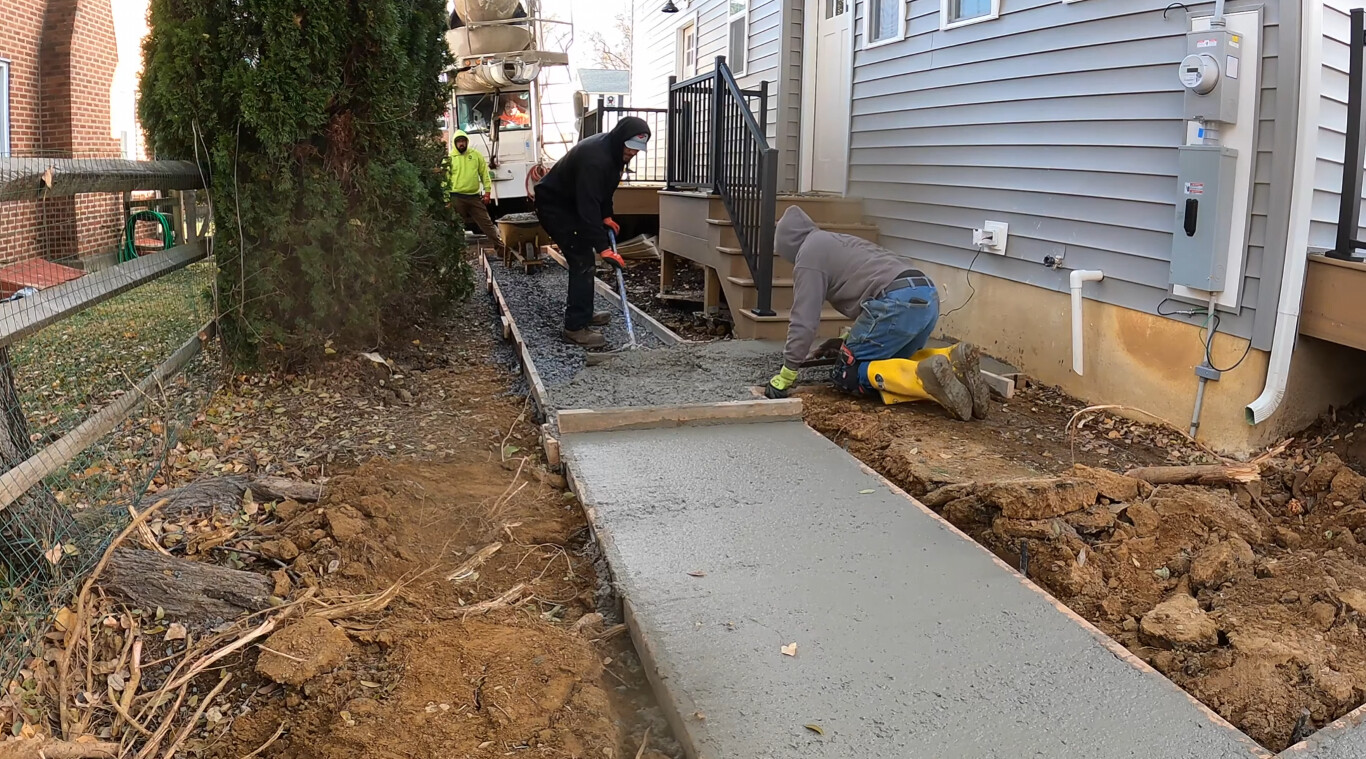
We excavate to the proper depth, typically 6 to 8 inches below the finished surface. This allows room for a gravel base and the concrete slab. We grade the subgrade to create proper slope for drainage. Then we install 4 inches of compacted gravel to provide a stable, well-draining base.
Forming
We set forms to define the walkway edges and maintain proper thickness. Forms also create the slight crown or slope needed for drainage. For curved walkways, we use flexible forms that create smooth, flowing lines.
Pouring and Finishing
We pour concrete to the proper thickness, usually 4 inches for residential walkways. We consolidate the concrete to eliminate air pockets and work the surface to create a smooth, level finish. We create control joints every 4 to 5 feet to control where cracks form. Finally, we apply your chosen finish, whether that is a simple broom texture, stamped pattern, or exposed aggregate.
Curing and Cleanup
We protect the fresh concrete while it cures and remove forms once the concrete has sufficient strength. We clean up the work area and restore any disturbed landscaping. After 7 days, your new walkway is ready for full use.
Frequently Asked Questions
Ready to Install New Walkways?
Contact us to discuss your walkway project. We will help you design functional, attractive pathways for your property.