Concrete Leveling
Fix sunken concrete without the cost and disruption of replacement using proven leveling techniques.
Why Concrete Sinks and Settles
Concrete slabs are heavy. When the soil beneath them shifts, compacts, or washes away, the concrete sinks into the void. This creates uneven surfaces, trip hazards, and drainage problems. Settlement is especially common in driveways, sidewalks, patios, and garage floors.
Several factors cause soil to fail under concrete. Poor compaction during initial construction leaves voids that eventually collapse. Water infiltration washes away soil particles and creates underground erosion. Tree roots grow under slabs and then decay, leaving empty spaces. Freeze-thaw cycles also contribute to soil movement in our climate.
The good news is that settled concrete can often be lifted back to its original level. This process, called slab jacking or concrete leveling, costs a fraction of what replacement would cost and takes only hours instead of days.
Signs Your Concrete Needs Leveling
- •Uneven sections that create trip hazards on walkways or patios
- •Water pooling on surfaces that used to drain properly
- •Gaps between concrete slabs and foundations or structures
- •Sloped driveways causing water to run toward your garage
- •Concrete that has visibly dropped from its original height
- •Difficulty opening doors or windows due to foundation settlement
How Concrete Leveling Works
We use proven techniques to raise sunken concrete back to the proper level. The method we choose depends on the situation, the amount of lift needed, and your preferences.
Slab Jacking (Mudjacking)
Slab jacking involves drilling holes through the sunken concrete and pumping a slurry mixture underneath. The mixture typically contains cement, sand, and other additives. As we pump the material, it fills voids and exerts upward pressure that lifts the slab. We carefully control the lifting process to avoid cracking the concrete. Once the slab reaches the desired height, the material hardens and provides permanent support.
Polyurethane Foam Injection
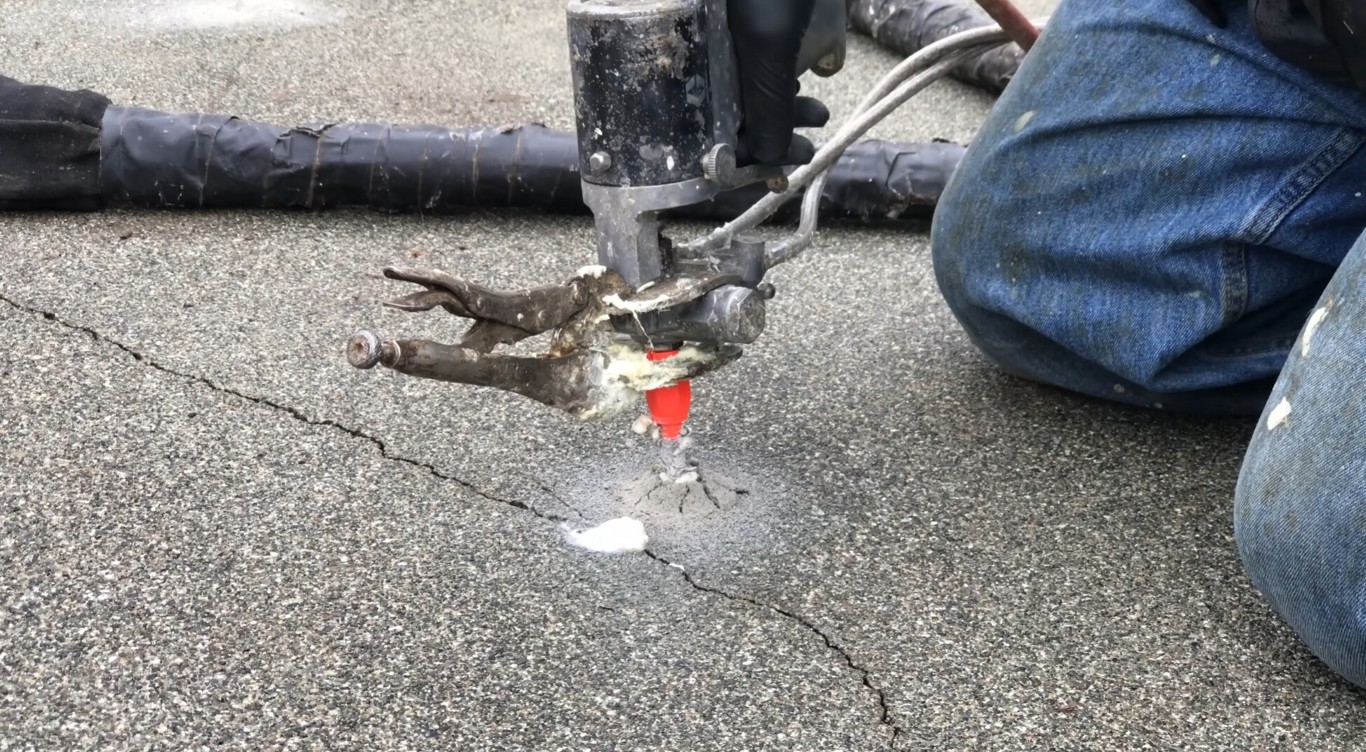
This newer technology uses expanding polyurethane foam instead of concrete slurry. The foam is injected through smaller holes and expands underground to fill voids and lift the slab. Polyurethane is lightweight, does not add stress to the soil, and cures very quickly. The material is also waterproof and will not wash away. This method costs more than traditional mudjacking but offers advantages in certain situations.
When Leveling Is Not Possible
Concrete leveling works best when the concrete itself remains in good condition. Severely cracked or broken slabs may need replacement instead. If the underlying soil problem cannot be corrected, leveling provides only temporary relief. We assess each situation honestly and recommend the most cost-effective solution, whether that is leveling or replacement.
Why Leveling Beats Replacement
When faced with sunken concrete, many homeowners assume they need complete replacement. However, concrete leveling offers significant advantages that make it the better choice in most situations.
Cost Savings
Leveling typically costs 50 to 70 percent less than replacing the concrete. You save money on demolition, disposal, materials, and labor. These savings add up quickly, especially for large areas like driveways or patios.
Speed and Convenience
Most leveling projects take only a few hours. You can use the surface again almost immediately after foam injection or within 24 hours after traditional mudjacking. Compare this to replacement, which involves days of demolition, installation, and curing. Your property experiences minimal disruption with leveling.
Environmentally Friendly
Leveling avoids sending concrete to landfills and reduces the environmental impact of producing and transporting new concrete. By saving existing concrete, you make an environmentally responsible choice.
Preserves Aesthetics
Leveling keeps your existing concrete with its aged patina. New concrete always looks different from old concrete, creating an obvious patch. Leveling maintains a uniform appearance across your entire surface. This matters especially for driveways, patios, and other visible areas.
Less Damage to Landscaping
Replacement requires heavy equipment that can damage lawns, plants, and sprinkler systems. Leveling uses minimal equipment and creates far less disruption to your landscaping. You avoid the cost and hassle of repairing collateral damage.
Frequently Asked Questions
Fix Sunken Concrete Today
Get a free assessment of your sunken concrete. We will explain your options and provide an honest estimate for leveling.